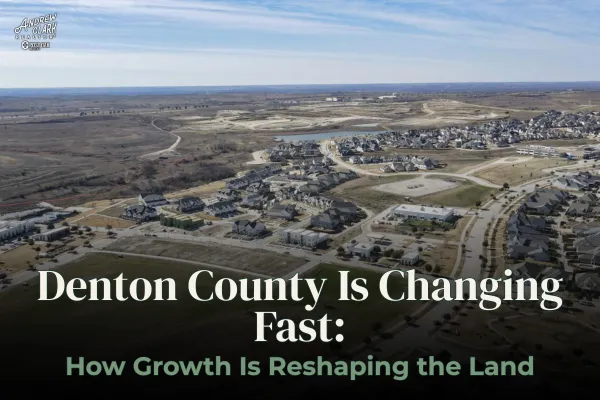
Denton County Is Changing Fast: How Growth Is Reshaping the Land
If you've lived in Denton County for any length of time, you've probably had this experience:
You drive down a road you haven't taken in six months and suddenly there's a neighborhood where you remember seeing nothing but open land.
That's becoming normal.
Denton County isn't simply adding more houses. We're watching the physical landscape of the county change in real time.
Longtime ranches and large tracts of undeveloped land are becoming master-planned communities. New neighborhoods are bringing new schools. New rooftops are attracting grocery stores, restaurants and retail. Roads are being expanded to accommodate all of it.
And in many parts of the county, we're still in the early stages.
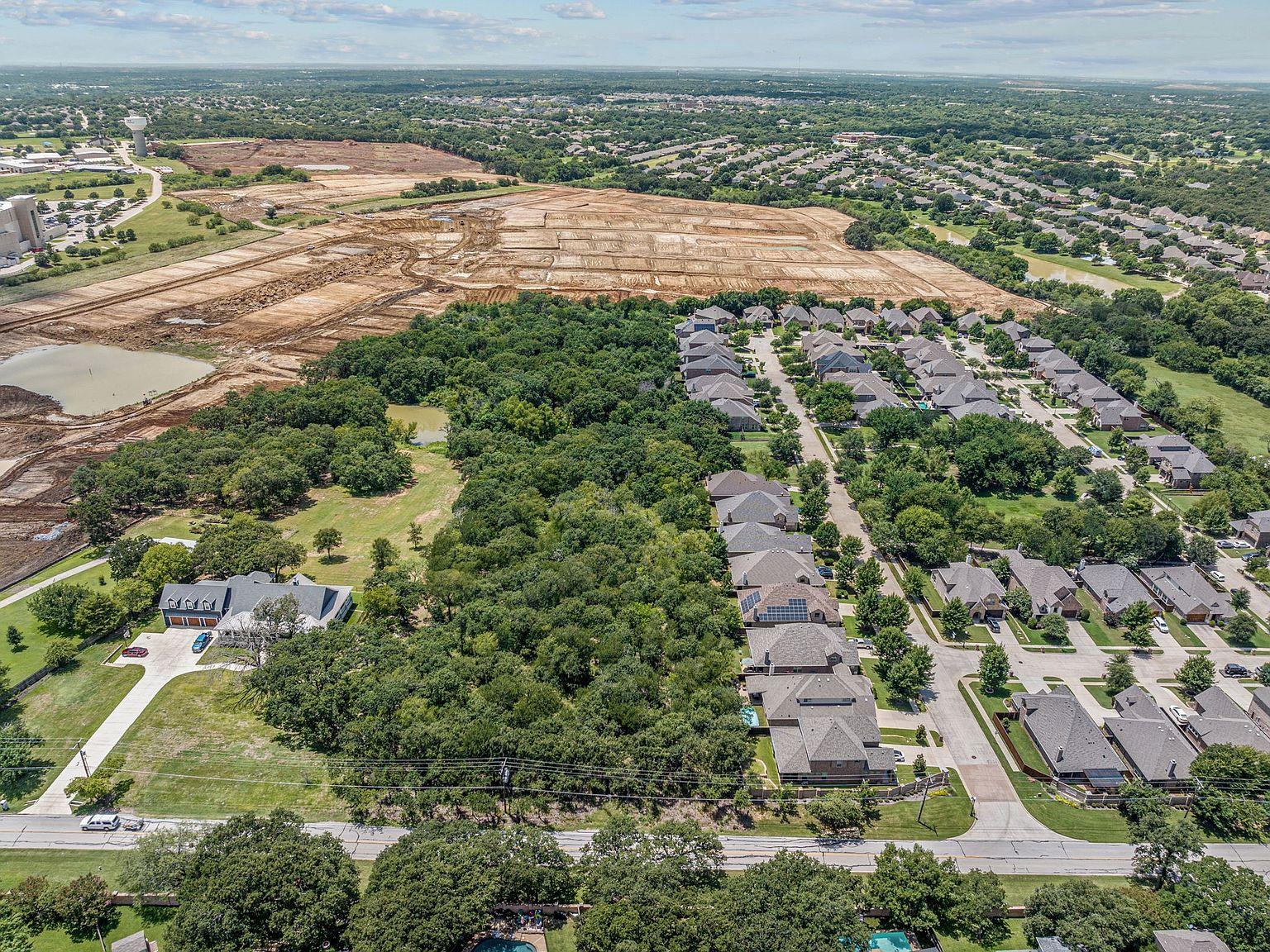
From Ranches to Real Estate
At the inaugural Denton County Growth Summit in August 2026, one of the featured discussions was appropriately titled “Ranches to Real Estate.”
It's difficult to think of a better description of what's happening here.
For generations, much of western and southern Denton County was characterized by ranches, farms and large pieces of open land.
Today, that land sits directly in the path of one of the fastest-growing metropolitan areas in the country.
DFW keeps expanding north.
Denton County keeps adding residents.
And developers need somewhere to put the homes, businesses, schools and infrastructure that come with them.
The result is a fundamental transformation of areas that, not very long ago, felt distinctly rural.
Cole Ranch Shows Just How Big These Projects Can Be
One of the clearest examples is Cole Ranch, southwest of Denton.
The project encompasses roughly 3,100 acres and plans call for more than 4,000 single-family homes, commercial development, employment space, parks, trails and land for future schools.
Think about that scale for a second.
We're not talking about another 150-home subdivision tucked behind an existing neighborhood.
We're talking about developments large enough to create entirely new sections of a city.
And Cole Ranch isn't the only example.
Argyle and Northlake Are Changing Just as Quickly
Drive around Argyle and Northlake and the transformation is impossible to miss.
Communities such as Harvest helped establish the I-35W corridor as a major residential destination, but development hasn't stopped there.
Thousands of additional homes are planned or underway throughout the surrounding area.
And the effects extend far beyond housing.
Argyle ISD has been building new campuses and reorganizing attendance patterns to accommodate enrollment growth.
Road projects are underway or planned.
Retailers and restaurants are following the population.
Land that once separated communities is gradually being developed.
The distance between Denton, Argyle, Northlake and the Alliance corridor increasingly feels smaller—not because the cities moved, but because development is filling the space between them.
FM 407 May Be One of the Best Places to Watch This Happen
If you want to understand where southern Denton County is headed, pay attention to FM 407.
The corridor connects areas around I-35W, Northlake and Argyle with Bartonville, Lantana, Double Oak and Flower Mound.
For years, portions of that drive contained significant stretches of undeveloped land.
That's changing.
Housing came first in many places.
Now we're seeing the next phase: retail, restaurants, grocery stores, schools, medical services and infrastructure following the rooftops.
That's a pattern worth remembering whenever you hear about another major retailer considering southern Denton County.
Companies aren't choosing these locations randomly.
They're looking at population projections, household income, traffic counts, housing growth and where they believe customers will be in five, ten and twenty years.
Growth Brings Things People Want
It's easy to talk about growth as though it's automatically a problem.
That's too simplistic.
Growth can bring tremendous benefits.
More housing can create options for people who want to live here. New businesses mean more restaurants, shopping and services closer to home. Commercial development can expand a city's tax base. New employers create jobs.
Infrastructure improvements that might never have been financially feasible can suddenly become necessary—and possible.
For families relocating to Denton County, many of these changes make the area more attractive.
But there's another side to the equation.
Growth Isn't Free
Every new neighborhood creates additional demand somewhere else.
More students eventually require more classrooms.
More drivers require more road capacity.
More households require additional water and utility infrastructure.
More development creates additional demand for police, fire and emergency services.
And once open land is developed, it's generally not becoming open land again.
That's why the real conversation about Denton County's growth shouldn't simply be:
“Is growth good or bad?”
A better question is:
“How do we handle the growth that's already coming?”
How much open space should communities preserve?
Who pays for new infrastructure?
Can roads keep pace with development?
Can school districts build quickly enough?
Where should higher-density housing go?
What types of commercial and industrial development belong near residential areas?
Those decisions will have an enormous influence on what Denton County feels like a decade from now.
What This Means if You Already Own a Home Here
For homeowners, growth can create both opportunities and headaches.
New retail and infrastructure may make an area more convenient and desirable.
Major employers moving nearby can create additional housing demand.
New roads can dramatically change accessibility.
But homeowners also need to pay attention to what's being proposed around them.
A future road extension, commercial project, apartment development or master-planned community can affect traffic patterns and potentially influence how buyers perceive a location.
That's why I think local development news matters even if you aren't planning to move anytime soon.
What's happening five miles away today could eventually affect your neighborhood.
What This Means if You're Moving to Denton County
If you're considering moving here, don't evaluate a community based solely on what exists today.
Ask what's coming.
Where are future roads planned?
Where are the schools going?
What land nearby is likely to be developed?
Where is commercial development headed?
What does the city's comprehensive plan show for surrounding property?
A house may stay essentially the same for the next ten years.
The area surrounding it might not.
Understanding that bigger picture is especially important in rapidly developing areas like Argyle, Northlake and western Denton County.
The Denton County of 2036 Will Look Very Different
I don't think that's an exaggeration.
We're watching major pieces of Denton County transition from rural land into suburban communities while DFW continues expanding north.
Some residents will love the changes.
Others will miss what these areas used to look like.
Most of us will probably feel a little of both.
Either way, these changes are worth paying attention to.
Because the biggest Denton County real estate story over the next decade may not be whether home prices go up 3% or 5% in a particular year.
It may be what gets built, where it gets built, and what happens to the communities around it.
I live and work here, so I'll continue following the major developments, roads, schools, businesses and community changes shaping Denton County—and explaining what I think actually matters for the people who call it home.
Thinking About Moving to Denton County?
If you're considering Argyle, Denton, Northlake, Flower Mound or another part of Denton County, choosing the right community isn't just about finding a house you like.
It's about understanding where you're buying and where that area is headed.
Reach out anytime if you'd like help figuring out which part of Denton County fits the way you actually want to live.
Frequently Asked Questions
Why is Denton County growing so quickly?
Denton County sits directly in the path of DFW's northward expansion. Employment growth, available land, new housing, schools, major transportation corridors and proximity to the broader Dallas-Fort Worth economy have all contributed to continued development.
Where is the most development happening in Denton County?
Growth is occurring throughout the county, but some of the most visible development is happening around Denton, Argyle, Northlake, the I-35W corridor and portions of southern and western Denton County.
Is Argyle, Texas still growing?
Yes. Argyle and the surrounding area continue to experience substantial residential development, school enrollment growth, infrastructure projects and additional commercial investment. Living in Argyle, TX
What should homebuyers consider when buying in a rapidly growing area?
Look beyond the house itself. Future roads, nearby undeveloped land, school boundaries, proposed commercial projects and long-term development plans can significantly change how an area functions over time.